Introduction
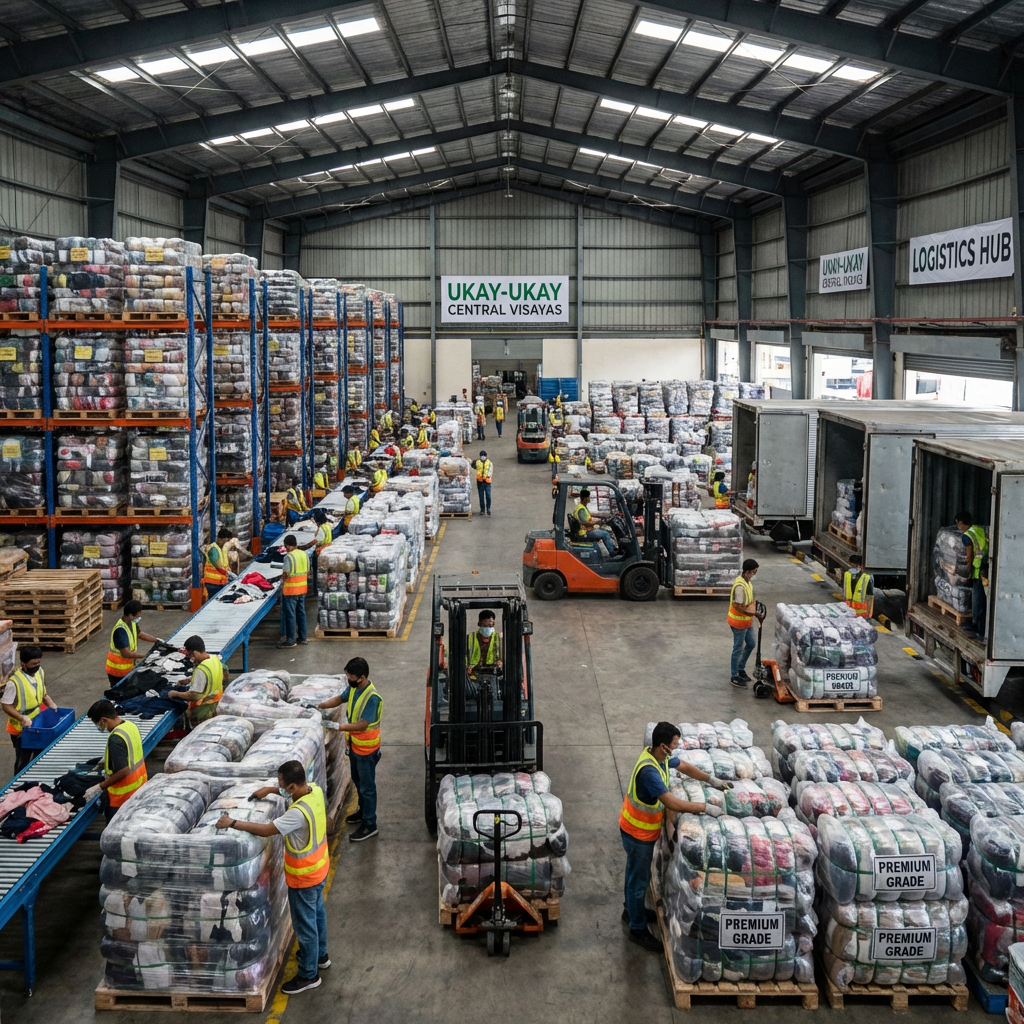
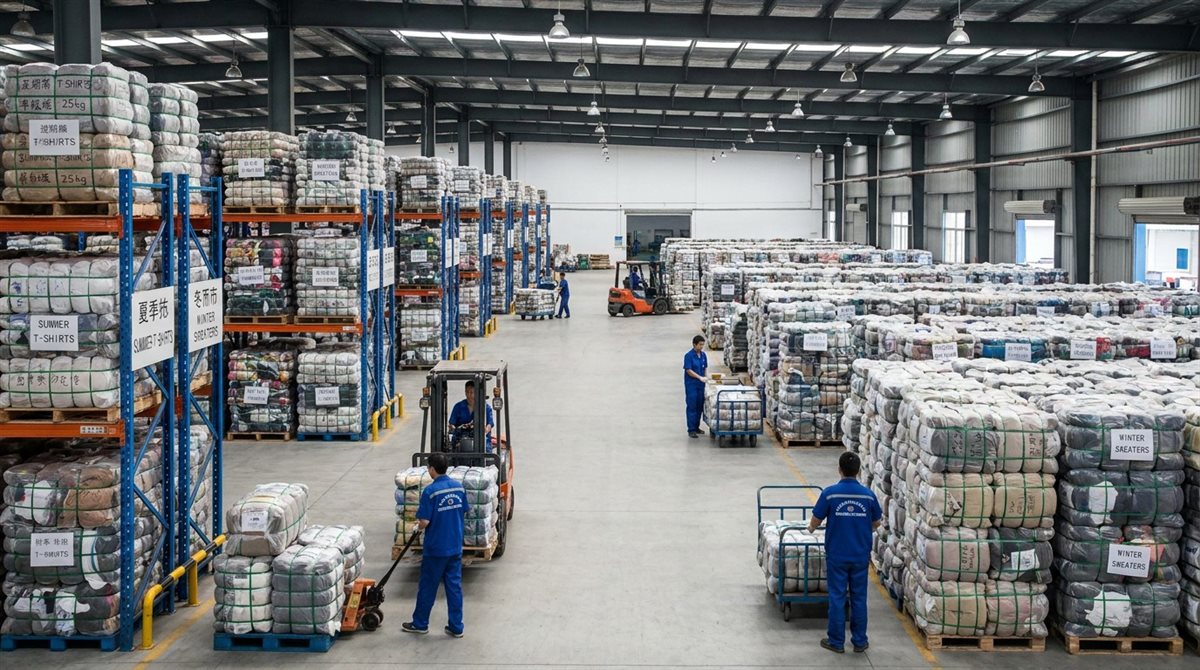
Buying bales of used clothes for resale is a different task from ordering finished garments. A bale is a compressed bundle of sorted secondhand clothing, and until it is opened, the buyer is trusting the supplier’s sorting standard, the grade definition, and the packing list. The channel where you buy determines how much of that trust you can actually verify before you pay.
A first-time buyer in Uganda found used clothes bales wholesale listed on a marketplace at a tempting price and paid without contacting the seller. When the shipment arrived, the bales contained a high share of worn-out items that could not be resold at any price. The buyer’s mistake was not the product category; it was buying through a channel where inspection was impossible.
This guide explains where to buy bales of used clothes for resale, how to compare sourcing channels, what bale types and grades exist, how to verify quality before paying, how to calculate the real cost per sellable piece, and how to build a repeat sourcing system. Zagumi’s figures are presented as company information, while general market observations are provided as guidance and may vary by destination.
1. Define the Bale You Need Before You Buy
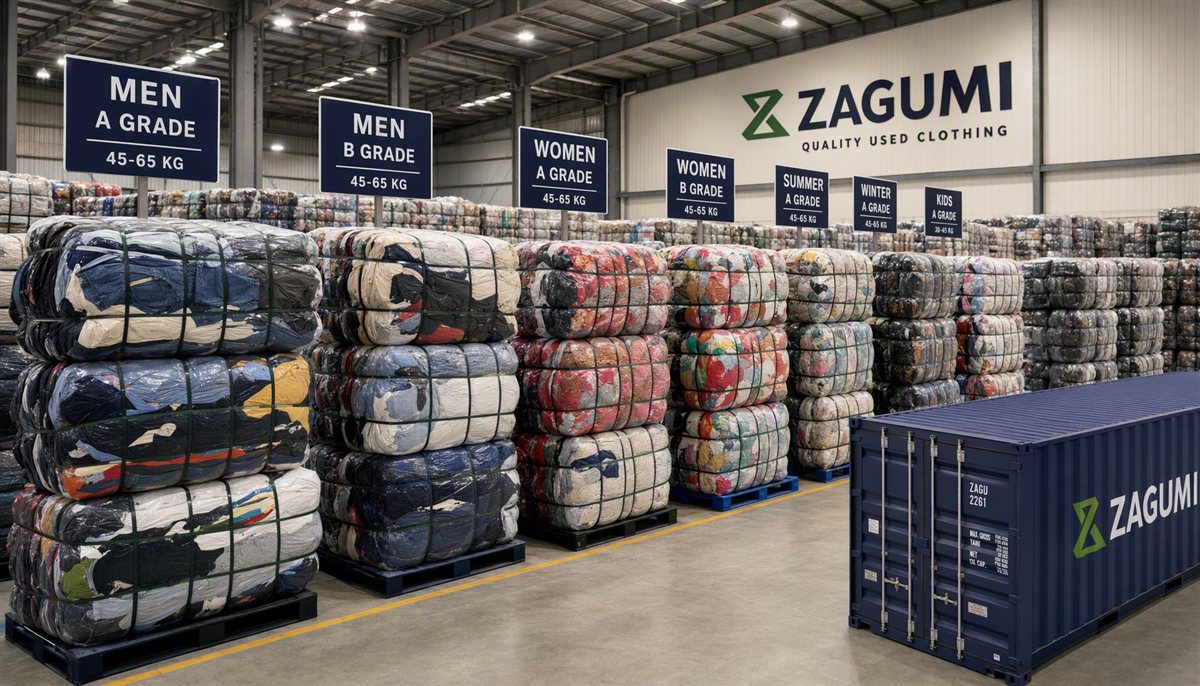
The phrase “bales of used clothes for resale” does not describe one product. When you are buying used clothing bales for resale, you are really buying a category, a grade, a season, a weight, and a packing method that have been combined into a bundle. If you do not define those elements in writing, any supplier can deliver something that technically matches the name but not your resale plan.
A buyer in Nigeria once asked for “mixed used clothing bales” and expected an even balance of men’s, women’s, and children’s items. The supplier loaded a mix dominated by adult tops. The buyer could still sell part of the load, but the missing trousers and children’s wear meant slower turnover and a lower average selling price.
Before contacting any wholesale used clothing supplier, prepare a short product brief with at least these points:
- Main resale channel: open market, shop, or online store.
- Target customer: income level, age, and fashion preference.
- Men’s, women’s, and children’s share of the load.
- Summer, winter, or all-season requirement.
- Preferred categories and categories to exclude.
- Acceptable grade and defect tolerance.
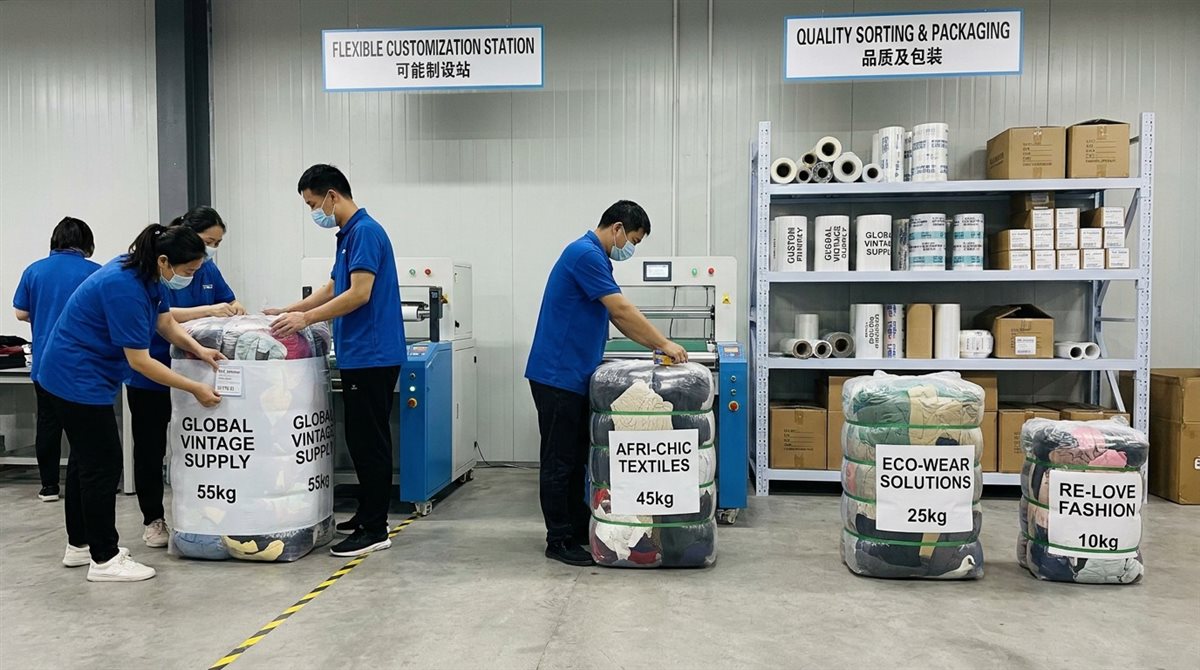
- Bale weight and target number of bales.
- Branded or non-branded ratio, if relevant.
- Container size if you plan to import by the container.
For example, a buyer serving a warm-climate market with limited storage may prefer lighter categories and smaller bales, while a buyer supplying a boutique may need premium sorted lots. The same phrase can describe either shipment, which is exactly why the written brief matters.
Zagumi reports that its clothing operation covers more than 120 categories, including winter clothing, summer clothing, and branded garments. This breadth is useful only when the buyer tells the supplier which slice of the catalog to focus on. A wider catalog is not a reason to accept a looser specification.
Action steps
- Write the specification before you search for suppliers.
- Define ratios by both weight and estimated piece count.
- State the season split explicitly.
- Ask the supplier to confirm whether the ratio is a target, an average, or a guarantee.
2. Where to Buy: Compare Sourcing Channels
The question “where to buy bales of used clothes for resale” usually has four practical answers, and they carry very different levels of risk, price, and verification power.
| Channel | How it works | Main advantage | Main risk |
|---|---|---|---|
| Direct factory supplier | You contact an exporter that sorts, grades, and packs its own bales | Inspectable process, custom ratios, better repeat pricing | Higher minimum order, slower communication |
| Export agent or trader | A middleman bundles goods from several factories | Lower entry volume, flexible small lots | No control over the actual sorting line |
| Online marketplace | Sellers list bales by photo and price | Easy discovery, broad comparison | Inspection is usually impossible |
| Local broker in your country | A domestic importer resells imported bales | Fast delivery, small quantities, local terms | Limited selection, higher cost per bale |
Direct factory suppliers are usually the strongest fit for buyers who want to buy used clothes in bales at scale and need consistent quality. Many importers searching for used clothes bales wholesale start on marketplaces and then move to a direct supplier once volume grows. Online marketplaces can work for testing one or two bales, but they reward the seller who can write a better description, not necessarily the supplier who can deliver a better bale.
A Tanzanian importer compared three channels for a first order. A marketplace quote was the cheapest per bale, but the seller could not provide packing lists, grading photos, or loading evidence. A direct supplier quoted slightly more but shared video of the sorting line and allowed a sample bale before the full order. The buyer chose the direct supplier, and the first container sold through faster than expected because the grade matched the buyer’s market.
If you are exploring a factory, check whether the company separates clothing from shoes in its operations. Zagumi, for example, reports a shoe operation of 1,000,000 pairs per month and more than 20 brand subcategories, with about 60% Nike and Adidas. These figures describe shoes, not clothing. A supplier that handles both should be able to show separate processes, packing standards, and pricing for each.
Action steps
- Shortlist at least three channels and request the same specification from each.
- Ask for verification evidence before you compare price.
- Test one channel with a small order before scaling.
- Ask any trader to identify the actual sorting factory behind the goods.
3. Know the Bale Types and Quality Grades
Not all used clothing bales for resale are packed the same way. Understanding the difference between bale types prevents expensive surprises.
| Bale type | Typical contents | Best suited for |
|---|---|---|
| Mixed bales | Random assortment across categories | Open markets with flexible sorting |
| Category bales | One type, such as jeans or T-shirts | Retailers who specialize by category |
| Season bales | Summer-only or winter-only clothing | Markets with clear climate |
| Grade-sorted bales | Only items passing a defined quality level | Boutiques and quality-conscious buyers |
| Branded bales | Known brands separated from general stock | Resellers who trade on brand recognition |
Grade labels are not standardized across the industry. One supplier’s Grade A may allow minor stains or missing buttons, while another supplier uses Grade A only for items ready for immediate sale. Always ask for the written grade definition and compare it with the actual bale contents before ordering again.
A buyer in Ghana once paid a premium for “Grade A mixed used clothing bales” and received garments that another exporter would have called Grade B. The price was still reasonable, but the buyer had planned resale prices based on a higher condition. The lesson is simple: the grade name is a claim, and the bale contents are the evidence.
Action steps
- Request the written defect standard for each grade.
- Ask for photos of opened bales, not only the outside of a bale.
- Compare two suppliers’ Grade A definitions side by side.
- Confirm whether grading is done by visual inspection only or by a documented checklist.
4. Verify Quality Before You Pay
Verification is where most bale purchases are won or lost. Because a bale is compressed, the outside says almost nothing about the inside. Buyers who decide to buy used clothes in bales should verify with samples, video, and documents before committing a large payment.
A realistic verification process includes:
- Product photos by category and grade.
- A sample of random pieces taken from ordinary sorting output, not selected pieces.
- Open-bale video that shows the middle of the bale, not just the top layer.
- A written grade and defect definition.
- Packing lists that match the bale labels.
- Loading photos and a container seal number for container orders.
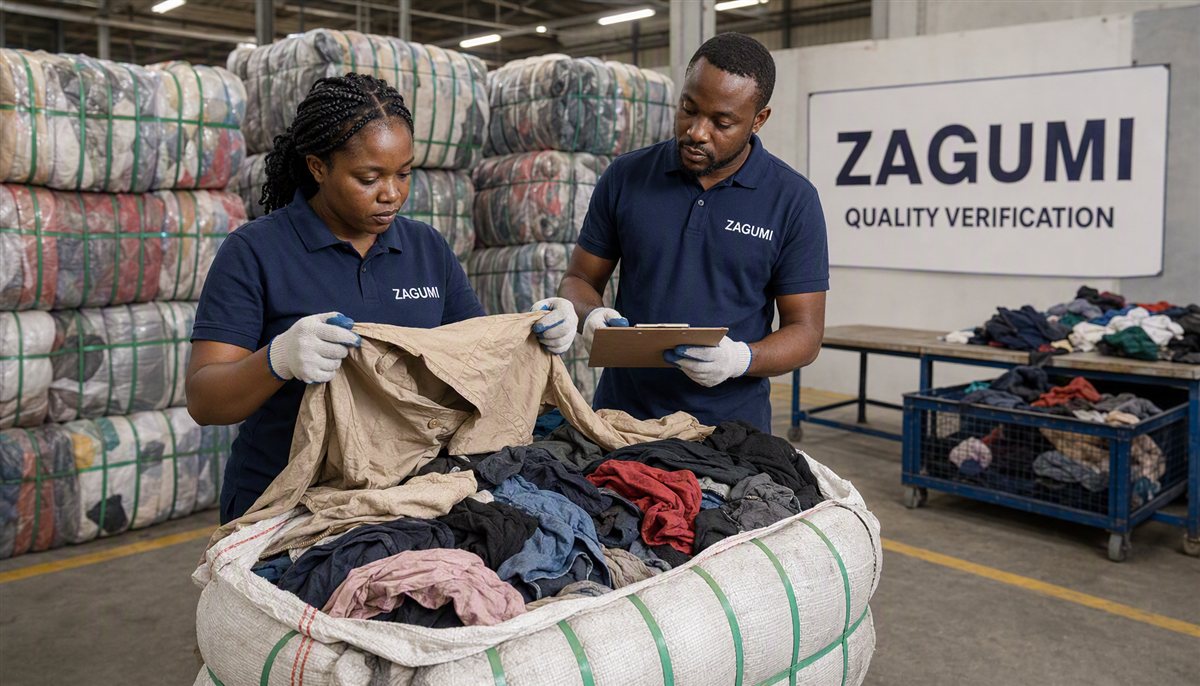
Zagumi states that it runs five inspection rounds with workers who have more than five years of practical experience. This is company information, and buyers should still ask how those rounds apply to their specific order. A stated company-wide process does not replace order-specific verification.
For the same reason, buyers should compare the strict quality control approach described by a supplier against their own inspection checklist rather than assuming a generic description covers everything.
Action steps
- Pay for a small sample order before committing to a large quantity.
- Request video evidence dated close to your order date.
- Keep the sample labels for comparison with later shipments.
- Use a third-party inspection for high-value or branded orders.
5. Deep Analysis: Cost per Sellable Piece
The most important number when you buy used clothes in bales is not the price per bale. For anyone purchasing used clothing bales for resale, the number that decides profit is the cost per piece you can actually resell.
Cost per sellable piece = (Bale price + freight + local handling + sorting loss) ÷ number of sellable pieces
Sorting loss matters more than most buyers expect. If 10% of a bale cannot be sold at the planned price, that 10% still paid freight and handling. A slightly more expensive bale with a higher sellable rate can be cheaper in real terms than a bargain bale with poor contents.
| Bale option | Price per bale | Estimated sellable rate | Sellable pieces | Effective cost per piece |
|---|---|---|---|---|
| Bargain mixed bale | $28 | 78% | 23 | $1.22 |
| Standard sorted bale | $35 | 88% | 26 | $1.35 |
| Premium grade bale | $46 | 94% | 28 | $1.64 |
The bargain bale looks cheaper per bale, but if the buyer’s resale price point is $4 per piece, the standard sorted bale produces more total margin per bale when turnover speed is included. These numbers are illustrative and will vary by market, but the calculation method is the same everywhere.
A reseller in Kenya compared two suppliers on bale price alone and chose the cheaper one. After sorting, the buyer discarded more items and spent extra labor hours, and the effective cost per sellable garment was higher than the more expensive supplier’s bales. That is the hidden cost that never appears on an invoice.
Action steps
- Track sellable pieces from every opened bale.
- Calculate effective cost per piece, not only price per bale.
- Record sorting time as a real cost.
- Compare suppliers using the same sellable-rate basis.
6. Price, Payment Terms, and Bale Logistics
Pricing for bales of used clothes for resale depends on grade, category, season, and volume. Lower prices usually mean less sorting, looser grading, or less control over the mix. When a price looks far below the market, the buyer should ask what was removed from the bale to achieve it.
Payment terms also vary. Many suppliers require a deposit before production and full payment before shipment. Buyers should agree on inspection points that release each payment stage, such as deposit after order confirmation, payment after packing approval, and final settlement after loading photos.
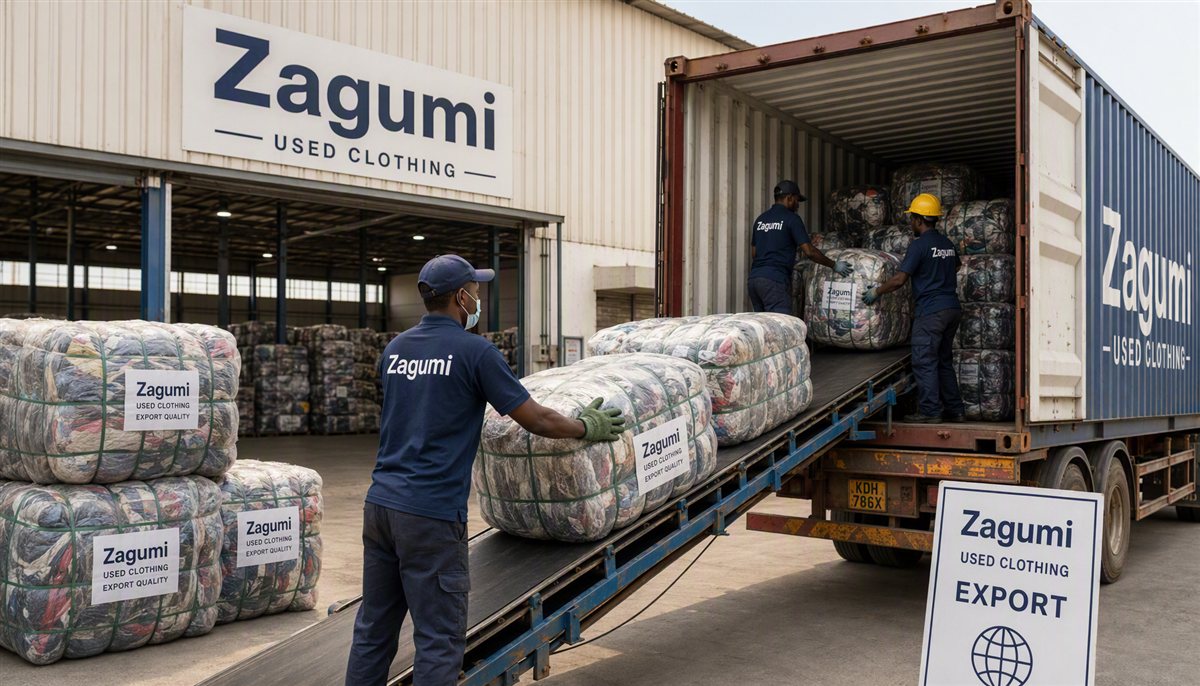
If you plan to import by the container, the same container pricing discipline applies. Zagumi’s stated container ranges for mixed non-branded clothes are $23,000–$25,000 for a 20-foot container and $45,000–$50,000 for a 40-foot container, with branded clothes at higher levels. These are company figures, not universal market prices, and the exact quotation should be verified with the supplier.
Logistics terms matter as much as price. Confirm whether the price is FOB, CIF, or EXW, who arranges export documentation, whether bales are packed to 25 kg or another weight, and how loading is documented. A buyer in Cameroon once compared two quotes and later discovered that the lower one excluded export handling and bale labeling, which erased most of the apparent savings.
Action steps
- Compare quotes on the same incoterm and bale weight.
- List every cost that is included and excluded.
- Agree on payment release points tied to inspection.
- Confirm container loading and packing documentation in writing.
7. Build a Repeat Sourcing System for Resale
A single bale order can be a test. A profitable resale business is built on a repeat system: the same supplier, the same specification, and the same measurement of results after every shipment. That repeat system starts with choosing a wholesale used clothing supplier whose process you can verify and whose grade standard you have tested.
After each order, record the sell-through rate by category, the average days in inventory, customer complaints, and unsold stock. This data tells you which bale type to increase, which grade to keep, and which supplier to trust with a bigger order.
A wholesaler in South Africa built a simple spreadsheet from the first container and used it to reduce slow categories in the second order. The supplier did not change; the mix did. That is the practical meaning of a repeat sourcing system.
For buyers who also trade shoes, keep clothing and footwear as separate programs. Shoe packing standards, such as 35 pairs of men’s shoes per 25 kilograms, do not apply to clothing. If you need branded footwear alongside clothing, you can explore used branded shoes as a separate product line with its own grading and packing rules.
Many suppliers describe their operation in general terms. The supply chain system page from Zagumi explains how the company organizes sourcing and shipment coordination, which can be a useful starting point for understanding what a structured supplier should be able to show. Buyers looking for apparel-specific sourcing can also review the used brand clothes supplier in China information and verify current stock and terms before relying on it.
Action steps
- Track results after every order, not just after the first.
- Adjust the mix based on your own sales data.
- Keep clothing and shoe programs separate.
- Negotiate improvements with the same supplier using documented results.
- Visit the Zagumi website to understand supplier capabilities before comparing offers.
Conclusion
Where to buy bales of used clothes for resale is answered by combining four decisions: the written specification, the sourcing channel, the verification evidence, and the cost calculation. The cheapest bale is rarely the cheapest per sellable piece, and the best channel is the one where you can inspect before you pay.
Buyers who define their mix, compare channels, verify bales with samples and documents, and measure results after every order build a sourcing system that improves over time. Suppliers like Zagumi publish their own company data, but responsible buyers connect any published claim to an order-specific inspection plan.
The practical formula stays the same:
Clear specification + verifiable supplier + real sellable-rate data = profitable bale sourcing
FAQ
1. Where do most buyers buy bales of used clothes for resale?
Most buyers use one of four channels: direct factory suppliers, export agents, online marketplaces, or local brokers. Direct factories usually offer the strongest verification and repeat pricing, while marketplaces work better for testing a small quantity. The right channel depends on volume, budget, and how much inspection you can arrange.
2. How many pieces are in a bale of used clothes?
The number varies by category, bale weight, and garment type. Lighter items such as T-shirts produce more pieces per weight than heavy items such as jackets. A 45 kg bale of lightweight tops may hold far more pieces than a 45 kg bale of denim, so buyers should ask for an estimated piece count, not only the weight.
3. What is a good price for used clothes bales wholesale?
There is no universal good price because grade, category, season, and volume all affect it. Buyers should compare suppliers using the effective cost per sellable piece rather than price per bale. A higher-priced bale with a higher sellable rate can be cheaper in real terms.
4. Can I inspect bales before I buy?
It depends on the channel. Direct suppliers can usually provide photos, opened-bale video, and a sample order. Marketplace sellers often cannot. A small paid sample order is the most practical way to verify quality before a large purchase.
5. What is the difference between mixed and sorted bales?
Mixed bales contain an unsorted assortment across categories, while sorted bales are separated by type, grade, or season. Sorted bales usually cost more but reduce local sorting labor and improve resale planning. The choice depends on your market and labor cost.
6. Should I buy mixed used clothing bales as a first order?
A small first order of mixed used clothing bales is a reasonable test if you also define the category and season ratio in writing. The risk is that “mixed” can mean many different things, so the written specification and a sample order matter more than the bale type itself.
7. How do I choose a wholesale used clothing supplier for repeat orders?
Choose a supplier whose sorting process you have verified, whose grade definition you have tested, and whose packing lists you can compare with the load. Track sell-through by category after every order and negotiate adjustments using that data. A reliable supplier is one you can verify, not one who merely describes reliability.